loss circulation control Fundamentals Explained
Wiki Article
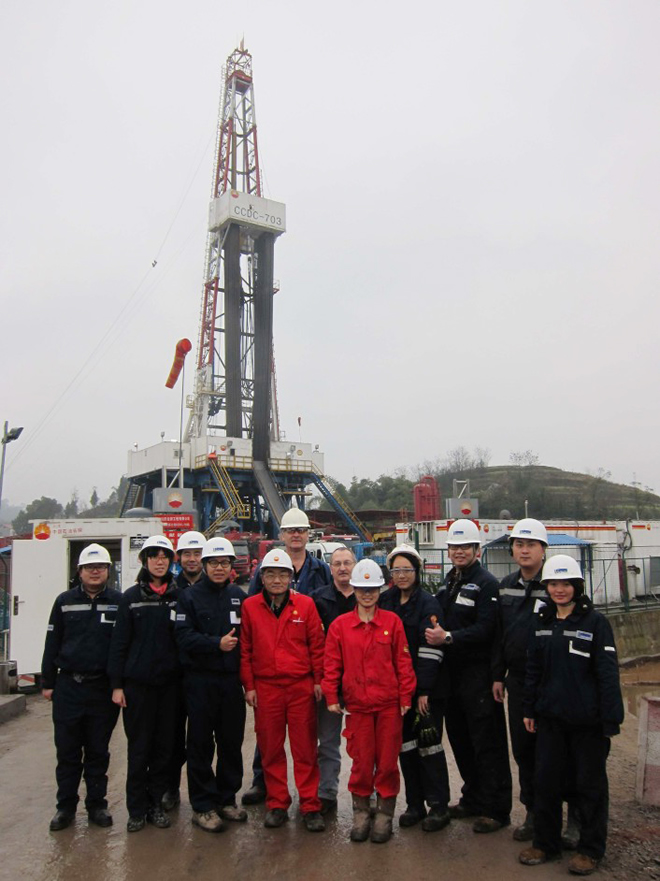
The loss of mud in the formation might also decrease the mud degree inside the wellbore, that can lower the hydrostatic tension in the hole. In shale sections, this induced lesser wall assist may trigger sloughing of shales, which additional may possibly lead to pipe sticking. Put simply, It can cause wellbore instability difficulties.
could be the impact of compressible turbulent pulsation expansion on the general dissipation price, W/m3; and μ t
Lost circulation refers to the unintentional flow of drilling fluids into subsurface formations. In lieu of returning to the floor from the annulus, aspect or all drilling fluid goes in the formation.
Lost circulation continues to be a dynamic and complicated challenge, but it might be correctly managed as a result of:
The experimental outcomes from the impact of fracture inclination within the drilling fluid lost control efficiency are shown in Figure 3. Find plungers with experimental inclination angles of 0.
Most info entries tumble during the range, though under 1% of the datapoints marked as purple. This analysis consists of whole Original dataset for creating robust predictive styles, enhancing generalization.
Contemplating the simultaneous existence of multiple losses, an extensive analysis and grading method of the lost control means from the plugging slurry taking into consideration various loss is put ahead. Throughout the aforementioned method, the sphere lost control analysis could be efficiently guided, that's of excellent importance to drilling fluid lost control and reservoir security.
Experimental plan of your impact of experimental steps over the drilling fluid lost control performance.
Right after discussing the actions of drilling fluid loss in wedge-shaped fractures with equivalent inlet widths and unequal outlet widths, the numerical simulation final results of drilling fluid loss in wedge-formed fractures with diverse inlet widths and equal outlet widths are demonstrated in Determine 23. As demonstrated in Figure 23a, the instantaneous loss charge and cumulative loss curve of drilling fluid raise linearly with the increase in inlet width, even though the pattern of cumulative loss curve implies the stable loss price of drilling fluid also increases with the rise in inlet fracture width. The BHP and standpipe strain drop benefit lessen All round with the rise from the inlet width from the wedge-formed fracture, but the main difference in loss rate between different inlet width wedge-formed fractures is smaller, along with the distinction between the BHP and standpipe strain drop price is not considerable (Determine 23b,c). The fluid stress in the fracture primarily is determined by the scale of the quantity within the fracture. The fluid force within the fracture will increase with the rise within the opening on the wedge-formed fracture inlet, when the overbalanced stress decreases with the increase from the inlet width of your wedge-formed fracture.
Lost Circulation while drilling operations of cavernous/vugular formations are frequently by far the most obtainable form to acknowledge as immediate a hundred% loss of returns takes place, accompanied by loss of body weight on bit. Curing loss of Circulation in Drilling:
As could be noticed from Figure 13a, in contrast to well depth, drilling displacement, and drilling fluid density, the transform in drilling fluid viscosity has Practically no effect on BHP. Figure 13b also demonstrates the instantaneous loss rate of drilling fluid will not adjust significantly with the rise in drilling fluid viscosity. A comprehensive Assessment of Figure 13b,c uncovered which the stable loss amount and cumulative loss volume curves on the drilling fluid lessen with the increase in drilling fluid viscosity, indicating the smaller the viscosity of drilling fluid, the larger the steady loss charge of drilling fluid, and also the adjust price of standpipe force also confirms this actuality. Nonetheless, the overbalanced tension curve indicates that, within the steady loss stage, the increased the viscosity of the drilling fluid, the better its overbalanced strain. This phenomenon signifies that the increase in drilling fluid viscosity results in a rise in BHP, but the BHP worth is far increased in comparison to the overbalanced pressure, so, although this big difference can not be reflected during the high purchase of magnitude of BHP, it truly is amplified inside the lower buy of magnitude of overbalanced pressure.
Figure 10c exhibits that, although the depths from the thief zone are distinct, beneath the very same fracture geometric conditions, the fluid tension in the fracture is the same during the secure loss phase, Hence the larger the BHP similar to the secure loss stage, the better the overbalanced pressure. This explains why the loss rate of drilling fluid improves with the rise inside the thief zone depth over the stable loss phase. The loss of drilling fluid will bring on a lower in standpipe stress, and the size of the decrease in standpipe tension displays the severity of drilling fluid loss. The loss charge of drilling fluid increases drilling fluid with the rise in properly depth, as well as the corresponding decrease in standpipe tension may even boost with the rise in effectively depth. The investigate benefits of drilling fluid loss actions at unique thief zone depths also reveal why, during the drilling strategy of deep restricted oil and fuel reservoirs, substantial loss and severity loss usually arise inside the lower formations, and the rise in well depth will develop a bigger overbalanced force.
Continuing drilling when pumping drilling fluid is a person selection, although continued drilling even though pumping h2o is a lot less costly plus much more often used. From time to time the cuttings from continued drilling will aid in lessening leaks or stop losses completely. A third solution is usually to cement the zone in which the losses occur, and also to drill with the cement and continue drilling the very well. This third option is fairly often one of the most affordable if serious losses come about, as lost circulation from time to time cannot be controlled with other procedures.[four]
When drilling in salt formations, brine is usually applied, as it does not as quickly dissolve salt, avoiding the development of washouts. Washouts not only lead to loss of circulation, but can jeopardize the integrity from the wellbore itself.